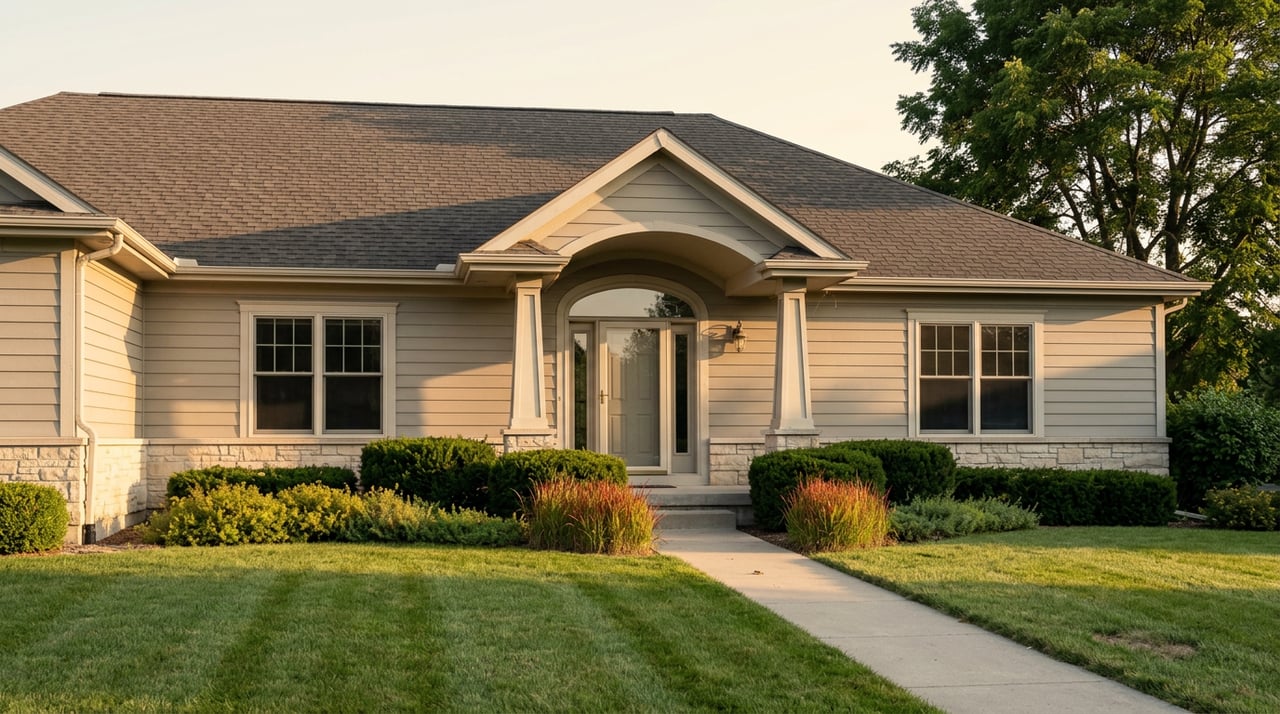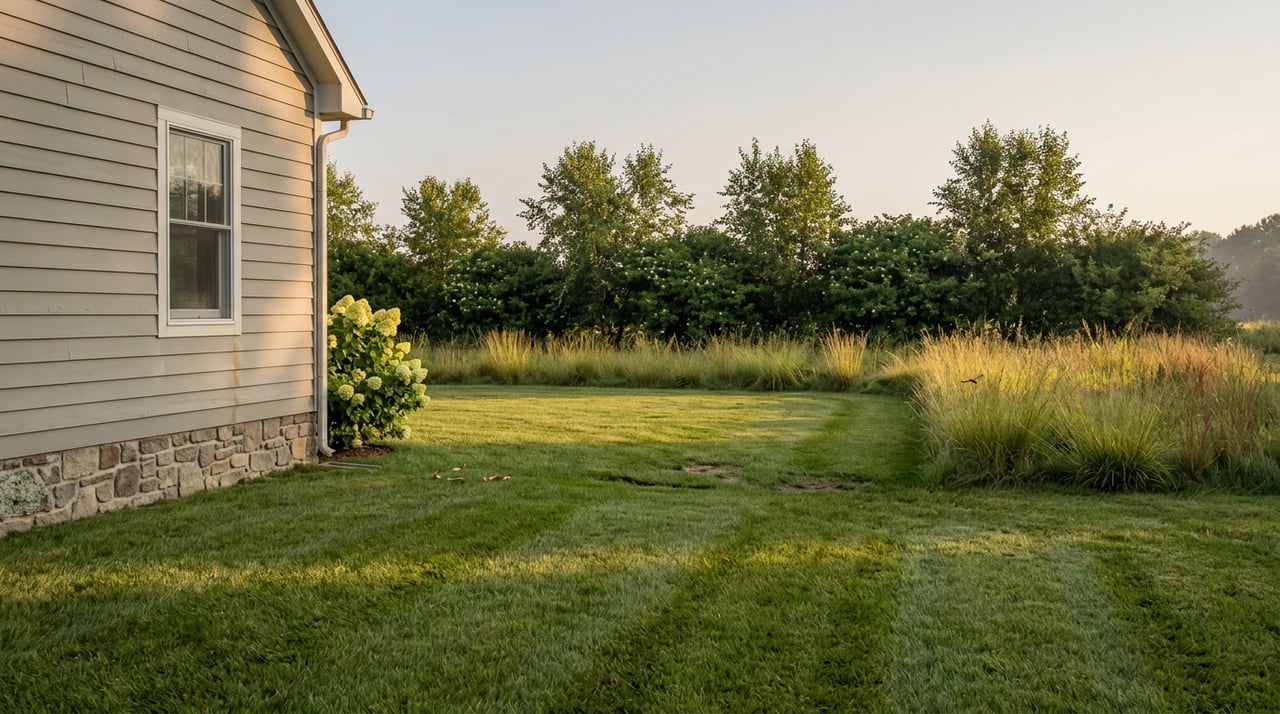
You've spent six months looking inside the Village of Oregon, and the search kept ending at the same place: the lot is too small, the yard backs to a neighbor's siding, and the price still starts with a six. Then your agent shows you a house two miles south in the Town of Oregon or west into the Town of Rutland. Same money, an acre of yard, mature trees, and a garage that fits actual vehicles.
The thing the portal doesn't tell you is that you crossed a utility line, and the closing is now a different kind of transaction. Municipal water and sewer stopped at the village edge. This house is on a private well and an onsite septic system. That single fact changes what the inspection period costs, how the timing has to work, and whether your lender will fund on the day everyone agreed to.
The Line That Actually Matters Isn't Price
The Village of Oregon sits inside a ring of townships where most rural homes draw water from a private well and discharge to a septic tank and drainfield. Inside the village, those systems are the utility's problem. Outside it, they're yours from the moment you sign.
| Setting | Water and Waste | Inspection Overlay |
|---|---|---|
| Village of Oregon | Municipal | Standard home inspection |
| Town of Oregon / Town of Rutland / Town of Dunn | Private well and onsite septic | Property-transfer well inspection plus Dane County septic status review |
The price gap between a village home and a comparable township home shrinks once you account for well testing, a septic inspection, potential drainfield remediation, and the lender overlays that come attached to certain loan products. It doesn't disappear, but "more lot for the same money" is an underwriting exercise, not a slogan.
The Three-Test Rule Under NR 812
Wisconsin doesn't require a well inspection at property transfer, but if you or your lender ask for one, the rules are specific. Under NR 812.46, the sample collection and analysis must be done by a licensed well driller or licensed pump installer, and the results must be reported on the DNR form. The Wisconsin DNR publishes the buyer and seller fact sheets that walk through what the inspector does and doesn't examine.
Three tests are mandatory for any potable well: total coliform bacteria (including E. coli), nitrate, and arsenic. Nitrate is a growing groundwater concern across agricultural Wisconsin and is treated as an acute health risk at levels above 10 mg/L. Arsenic was historically framed as an eastern-Wisconsin issue and has since been detected more broadly, which is why the state added it as a required transfer test. The inspector also searches the property for unused wells, which have to be filled and sealed by a licensed professional if they exist.
The inspection is a compliance and quality report, not a passing grade. A noncomplying feature isn't automatically a deal killer, but it's a negotiation point, and if your lender flagged it, the correction has to happen before the loan funds.
Dane County's Triennial Septic Rule, And Why It Shows Up At Closing
Onsite septic in Dane County is regulated by Public Health Madison & Dane County. Under state and county rules, most private systems must be inspected every three years, and the tank must be pumped whenever the combined scum and sludge reaches one-third of tank volume. The PHMDC private wells and septic page is the authoritative reference, and Environmental Health at 2300 S. Park Street answers questions at 608-242-6515.
Sellers are responsible for making sure the inspection is current and the maintenance report is on file. That paper trail matters when you're the buyer. Before writing your offer, pull the property on Access Dane and look up the active septic system record. A missing report, an overdue inspection, or a maintenance flag tells you something about the seller's stewardship of the system, and it tells you what conversation your agent needs to have with the listing side before contingencies drop.
What An "Alternative" System Signals
When you scroll through Oregon-area listings and see a mention of a mound, pressure-dosed, aerobic, or sand-filter system, that's not a red flag on its own. It's a message about the site. Alternative systems are installed where soils don't perc well enough for a conventional gravity drainfield, where the water table sits high, or where the lot geometry forces the design onto marginal ground.
What alternative systems bring with them is ongoing cost:
- Mound systems require pumps that use electricity and eventually wear out
- Aerobic treatment units typically need an annual service contract with a certified maintainer
- Sand filters and pressure-dosed systems have specific repair pathways that a conventional installer may not handle
Ask the inspector what type of system is on the property, when the pump was last replaced, and whether the maintenance contract is current. A well-maintained mound can outlast a poorly maintained conventional system. The question is whether the seller treated it as infrastructure or as furniture.
The 48-Hour Window That Breaks Closings
Here is the piece that catches Oregon-area buyers off guard more than the tests themselves. Bacteria samples are perishable. Under NR 812, coliform samples must be analyzed within 48 hours of collection, and most Wisconsin certified labs won't accept samples pulled Friday through Sunday because they can't process them in time. That single scheduling constraint compresses a rural inspection period more than buyers expect.
A realistic timeline looks like this:
- Offer accepted on Monday. Your agent lines up the licensed well inspector and the septic inspector the same day.
- Well samples pulled Tuesday or Wednesday, in a lab by Wednesday or Thursday, results back three to five business days later.
- Septic tank located, uncovered, pumped, and inspected. Aerobic or pump-based systems get their mechanical components tested separately.
- Any noncomplying feature on the well form or any septic deficiency gets quoted for repair, and the negotiation happens inside your contingency window, not outside it.
- Lender receives the DNR form and the septic maintenance report before final underwriting.
Scheduling well work for the last week of the inspection period leaves no room for a reinspection if a bacteria sample comes back positive, and reinspection is common enough that you should plan for it, not react to it.
FHA And VA Add A Layer
If you're financing with an FHA or VA loan, the state minimum is a floor, not a ceiling. Lender overlays typically add lead and nitrite testing to the three state-required tests, and some lenders want the well casing depth documented on the form. Ask your loan officer for the well and septic requirements in writing before you write the offer, then hand that list to the well inspector when you schedule.
Buyers who assume "well inspection" means the same thing to every lender end up paying for a second sample draw because the first one didn't include the panel their underwriter wanted.
FAQ
Does the seller have to fix a noncomplying well? Not automatically. The DNR isn't a party to the transaction. Noncompliance is a negotiation, and any correction has to be performed by a licensed well driller or pump installer. If your lender is the one flagging it, correction usually becomes a funding condition rather than a preference.
Can I use the seller's recent water test? Under NR 812.46(9), samples collected for other purposes, including recent construction or pump work, can't be used to satisfy the property-transfer inspection requirement. If a transfer inspection is being done, it needs its own draw.
What if the property has a shared well with a neighbor? Shared wells add an agreement layer, a maintenance-cost-sharing question, and sometimes an easement that has to appear correctly in the title work. Confirm the shared-well agreement exists in writing and that both parcels reference it before you're deep in the inspection period.
Is a septic system with an old permit a problem? Not on its own. Older systems predate current setback standards, and some were installed under earlier codes or without a permit on record. That doesn't mean the system is failing. It means the layout, the location, and the replacement area available on the lot all deserve a closer look during the inspection.
Rural Oregon-area properties reward the buyers who slow down for the diligence and punish the ones who assume a rural closing runs on the same clock as a village one. If you're weighing a home outside the village line and want the inspection sequence mapped before you write the offer, Beth Baty works these transactions across the Oregon area and can help you price the underwriting, not just the listing. Let's Connect.